
design insights
Demonstrating community care through intentional, empathetic, and accessible wayfinding design.
by Jenn Maine and Kelsey Raupp

Kelsey Raupp
senior Designer
Jenn Maine
Director

Wayfinding is about more than signage. It’s about visitor confidence.
Clear, accessible wayfinding is often the difference between a seamless experience and a stressful one. In public and private spaces alike, whether outdoor or interior, people instinctively seek clarity, consistency, and reassurance as they navigate unfamiliar or complex environments.
Here, we’ll explore strategies for designing systems that build trust, reduce friction, and create more intuitive, engaging experiences.
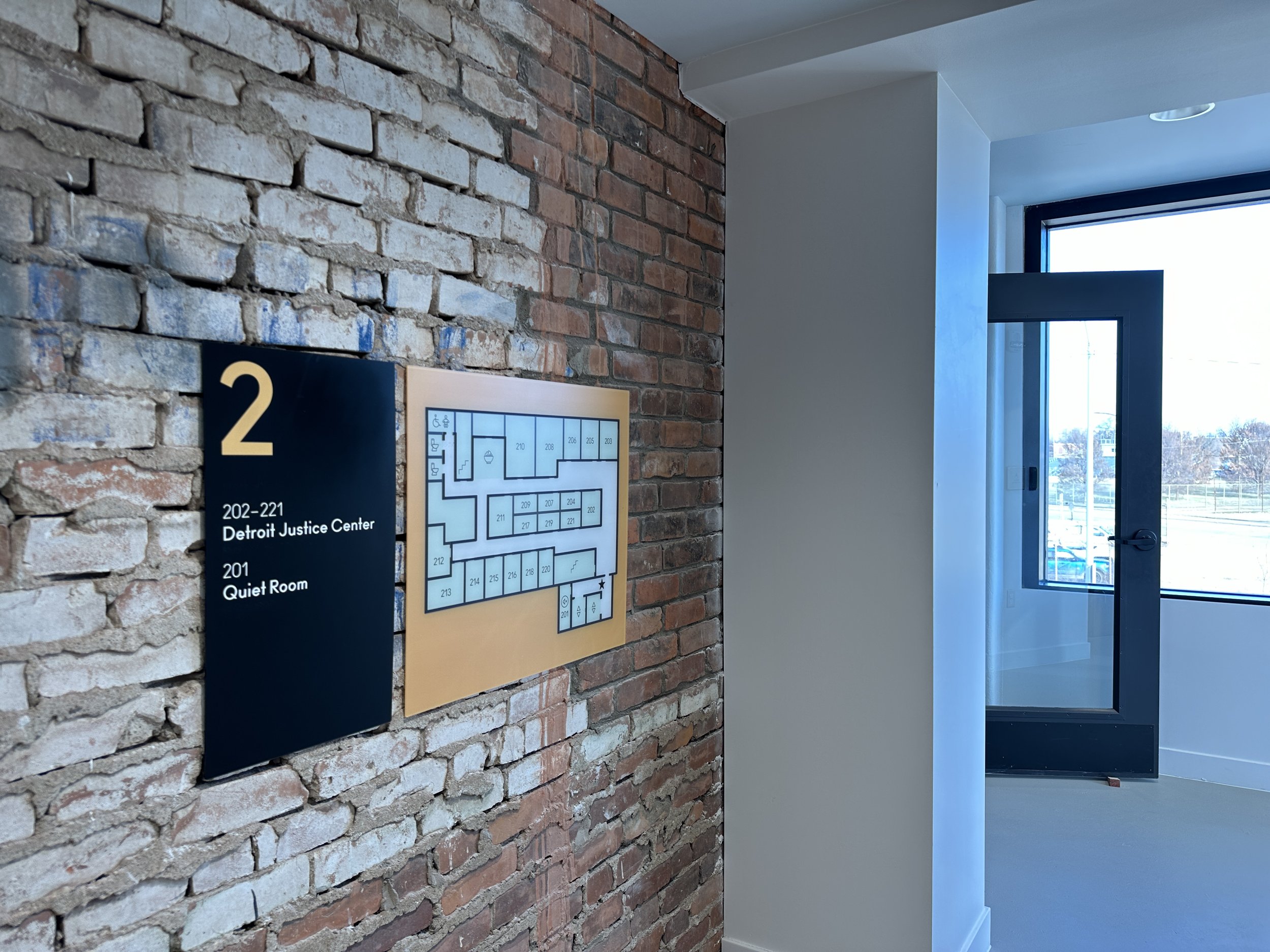

Interior Wayfinding Signage at The LOVE Building in Detroit, MI. Property of Studio Incognita.
Driving inclusivity through meeting—and exceeding—ADA compliance
Most projects require that the signage designer only meet the requirements outlined by the Americans with Disabilities Act (ADA), but we like to think of the guidelines as a starting point.
Broadening ADA’s scope
While ADA guidelines offer general recommendations for installation height, tactile lettering and braille specifications, Room ID signs and Egress signage, there are other opportunities to expand these recommendations across additional signage types such as:
Tactile elements and braille on elevator directories and corridor directional signage
Tactile elements and braille on Interpretive and storytelling signage
Tactile egress maps for inclusive and safe exit routes
Inclusion of tactile elements on exterior wayfinding systems, as they are not included in ADA requirements at all
Other Opportunities for Inclusivity
We should consider users who may not be visually impaired, but might have other challenges interacting with or understanding signage. Some strategies to explore are:
Inclusion of multiple languages for those who do not have English as a first language
Use of iconography based on the universal standard for those who do not have their language represented on signage, or persons with limited literacy skills
Avoid complete dependence on color-coding for those with color blindness
Inclusion of audio wayfinding elements
Utilize enhanced interior wayfinding through Google Indoor Maps or mobile apps such as GoodMaps to support the visually impaired, hearing impaired, visitors with reduced mobility, and neurodiverse individuals
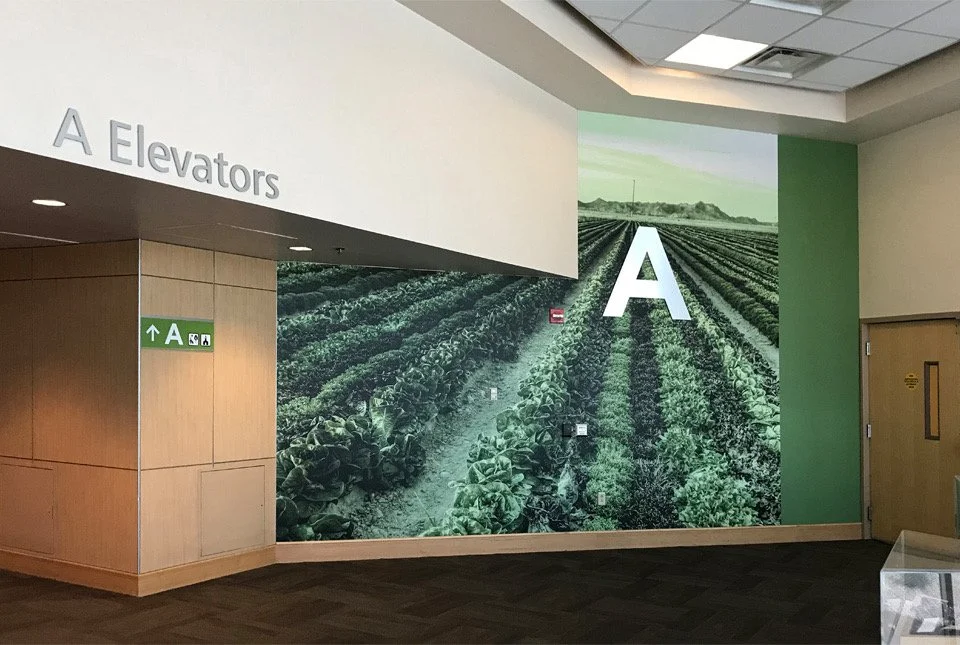
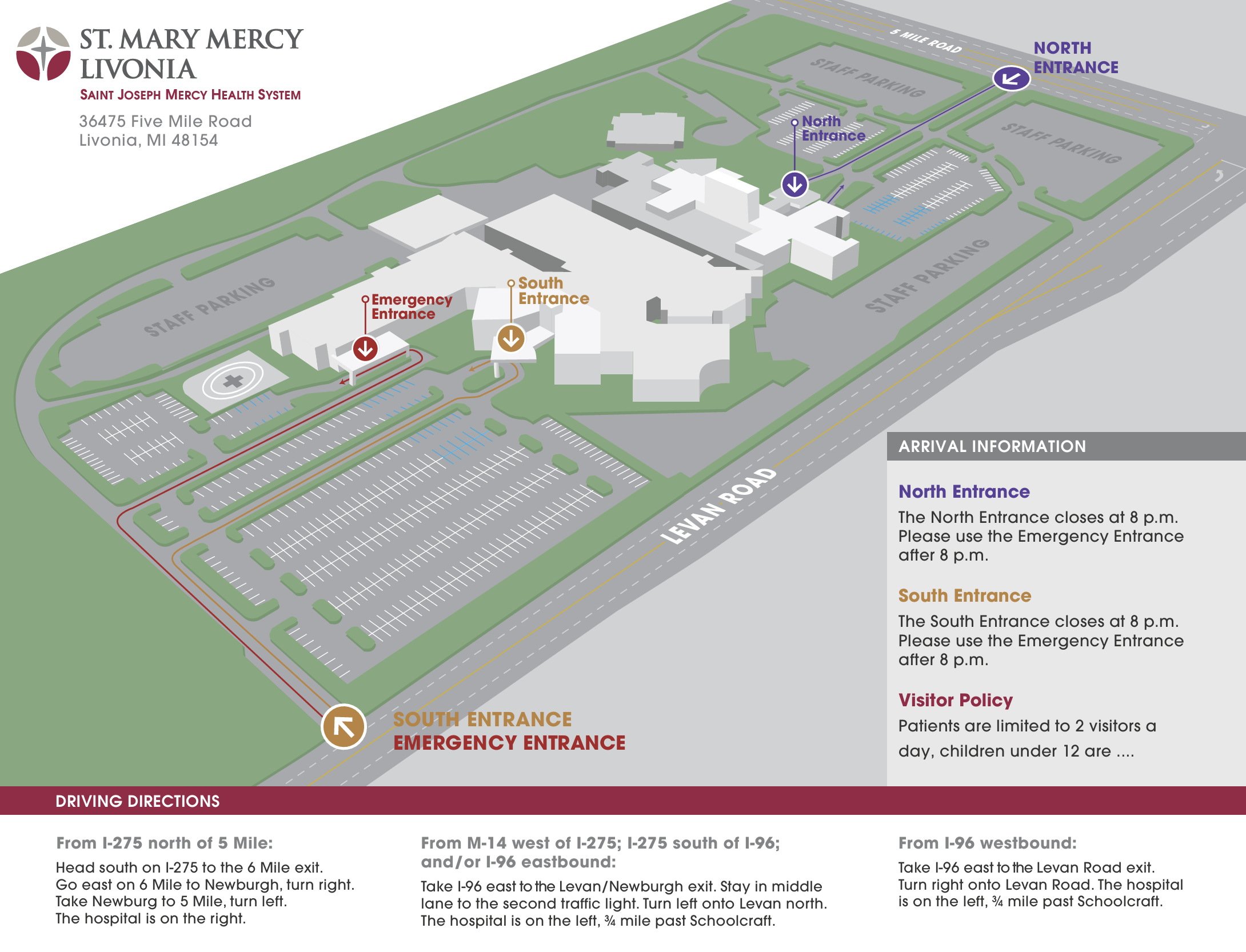
Interior wayfinding at Yuma Regional Medical Center in Yuma, AZ (left/top) and pre-arrival entry map for St. Mary Mercy Livonia (right/bottom) by Kelsey Raupp
Meet users where they are to get them where they need to go
To guide all aspects of a visitor’s experience, we must not only consider all of the reasons someone will enter the space, but also anticipate the needs they may come with.
Consider all types of visitors and users
A space that is both private and public often has several user/visitor types, ranging from employees who are familiar with the space to first-time or infrequent visitors. Consider not just what they are there to do, but how they are showing up. Things to consider include but are not limited to:
Physical, cognitive, language, and accessibility barriers (see above)
Generational needs and preferences such as in-person guidance (such as directions from reception) vs. passive guidance (digital references, maps and apps)
Emotional needs of the user: For example, high-stress spaces (like a hospital) require more guidance and high clarity. Low stress visits (like a shopping mall) require less guidance, and the visitor and tenants benefit from users wandering
Needs of users are pregnant, visiting with small children, or are seniors
Pre-arrival and planning the visit
Information can be shared with users before they arrive to help their visit run smoothly:
Establish a visit tab on your website to house wayfinding information
Include information such as: where to park, where to enter the building, where to check in, and high-level destination and amenity maps
Add Google Indoor Maps of your lobby and interior public areas
Visitor Arrival
To assist in arrival, you may consider:
Gateway signs and visual landmarks for primary points of arrival
Both digital and in-person touch points to direct visitors
Descriptive talking point flip books for reception staff
Mini printed interior maps at reception
Navigation to Destination and Amenities
Now that the visitor has arrived, they need to clearly understand where they need to go and how to find what they might need along the way. This can be done through wayfinding and signage types such as:
Corridor Directional Signage
Elevator/Building Directories
Informational Kiosks and Map Signage (static or interactive)
All of these through the lens of the emotional and physical needs of the visitor
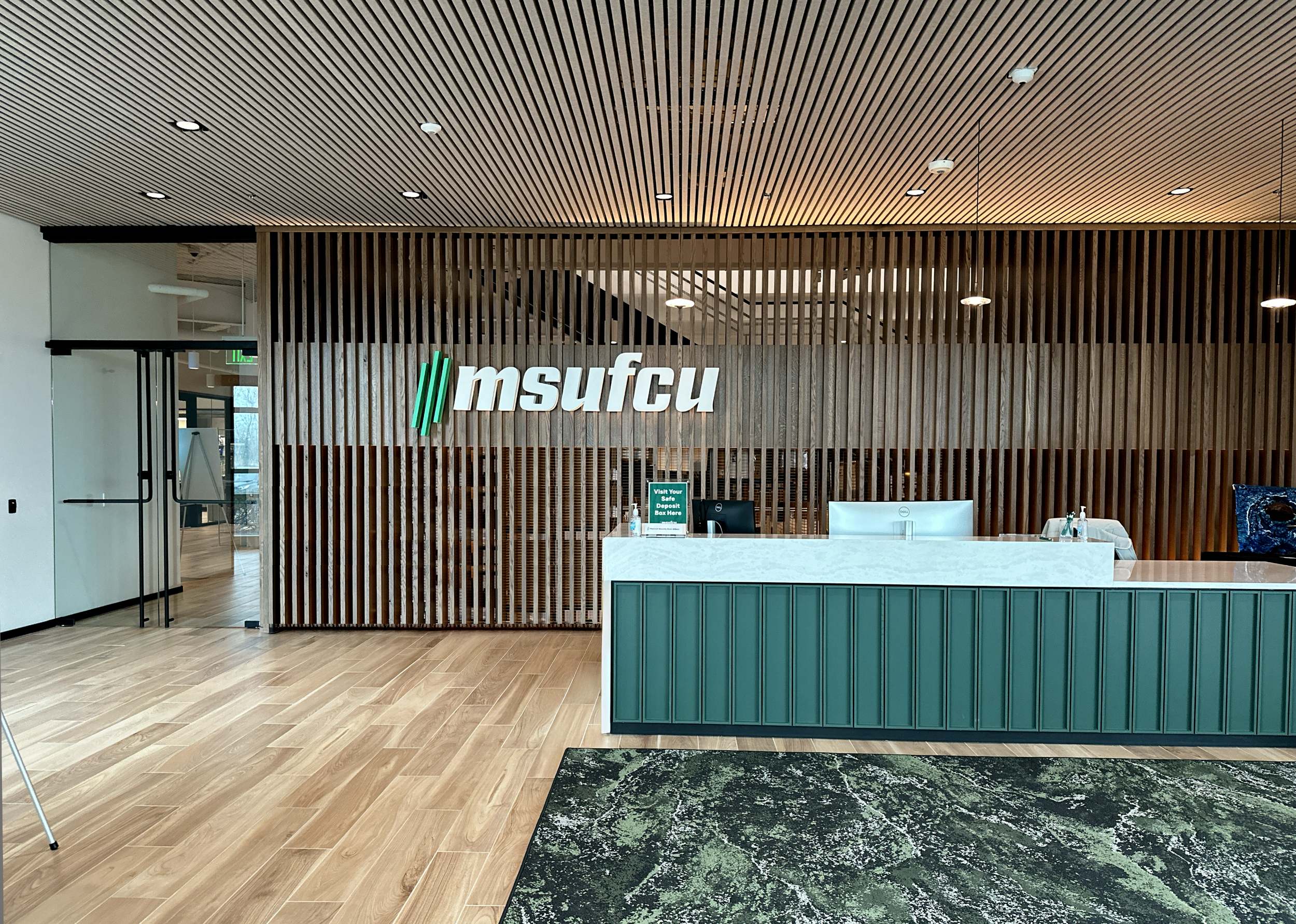
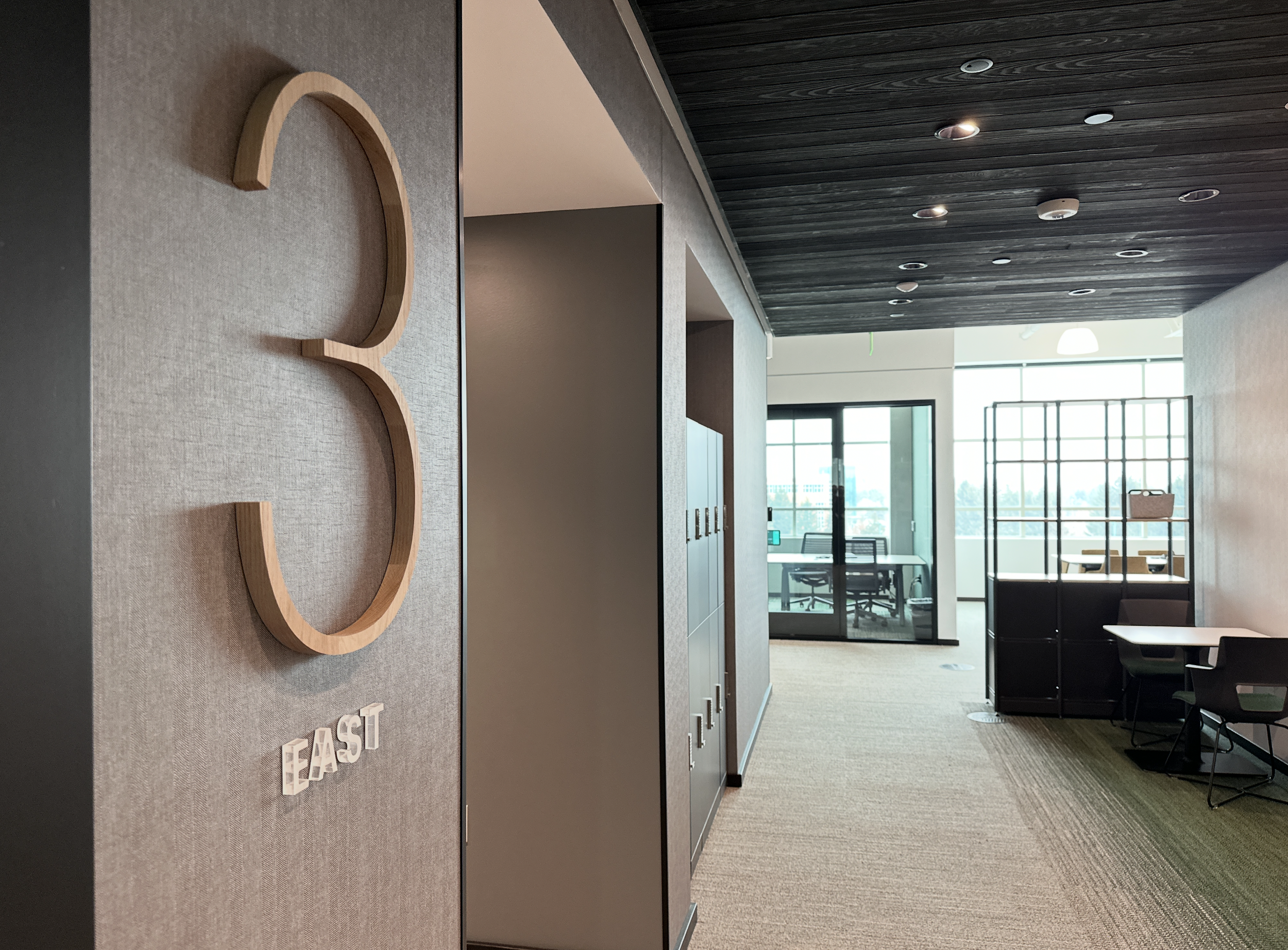
Interior Wayfinding Signage at MSUFCU Headquarters 1 in East Lansing, MI. Property of Studio Incognita.
Honor the architecture by creating systems that are both integrated and responsive
The most beautiful and successful wayfinding systems are designed to be part of the architecture where they can, and absolutely flexible where they must. We understand the balance between something that looks quality and the need for a flexible system that can adjust as the purpose of a space shifts over time. Some strategies we use to bridge this gap are:
Work closely with architects through the schematic design phase to plan integrated signage and environmental elements that reflect the interior and feel as though they’ve always been there
Build a wayfinding materials palette that bridges the gap between architectural materials (wood, stone, steel) and easier-to-replace standard signage materials (acrylic, aluminum)
For interiors: utilize easy-to-update magnetized acrylic signage panels for temporary nameplates
For all signage in the public realm—make it tamper-proof by using vandal-resistant fasteners and raised lettering and braille that is integral to the surface (as opposed to applied)
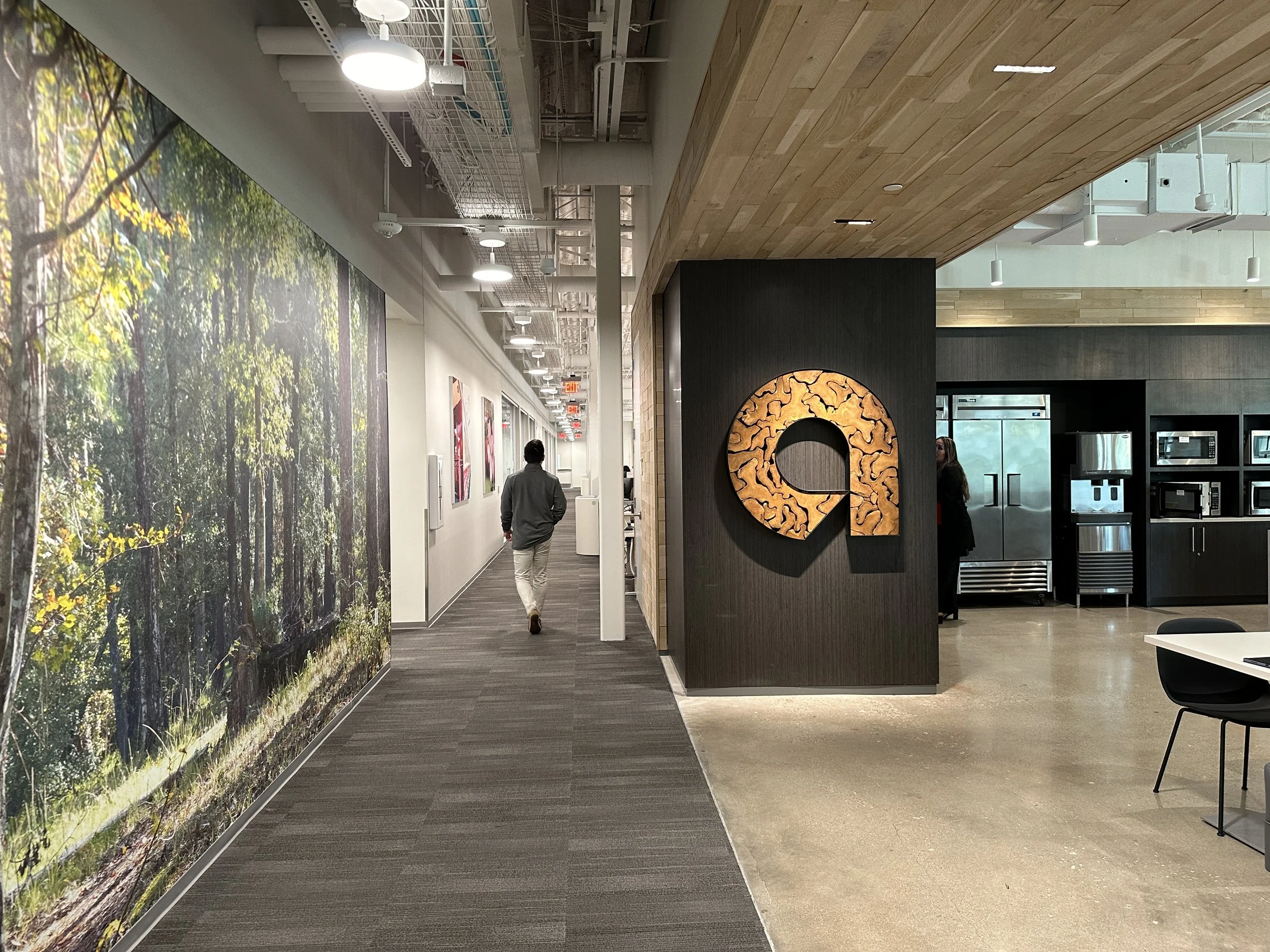
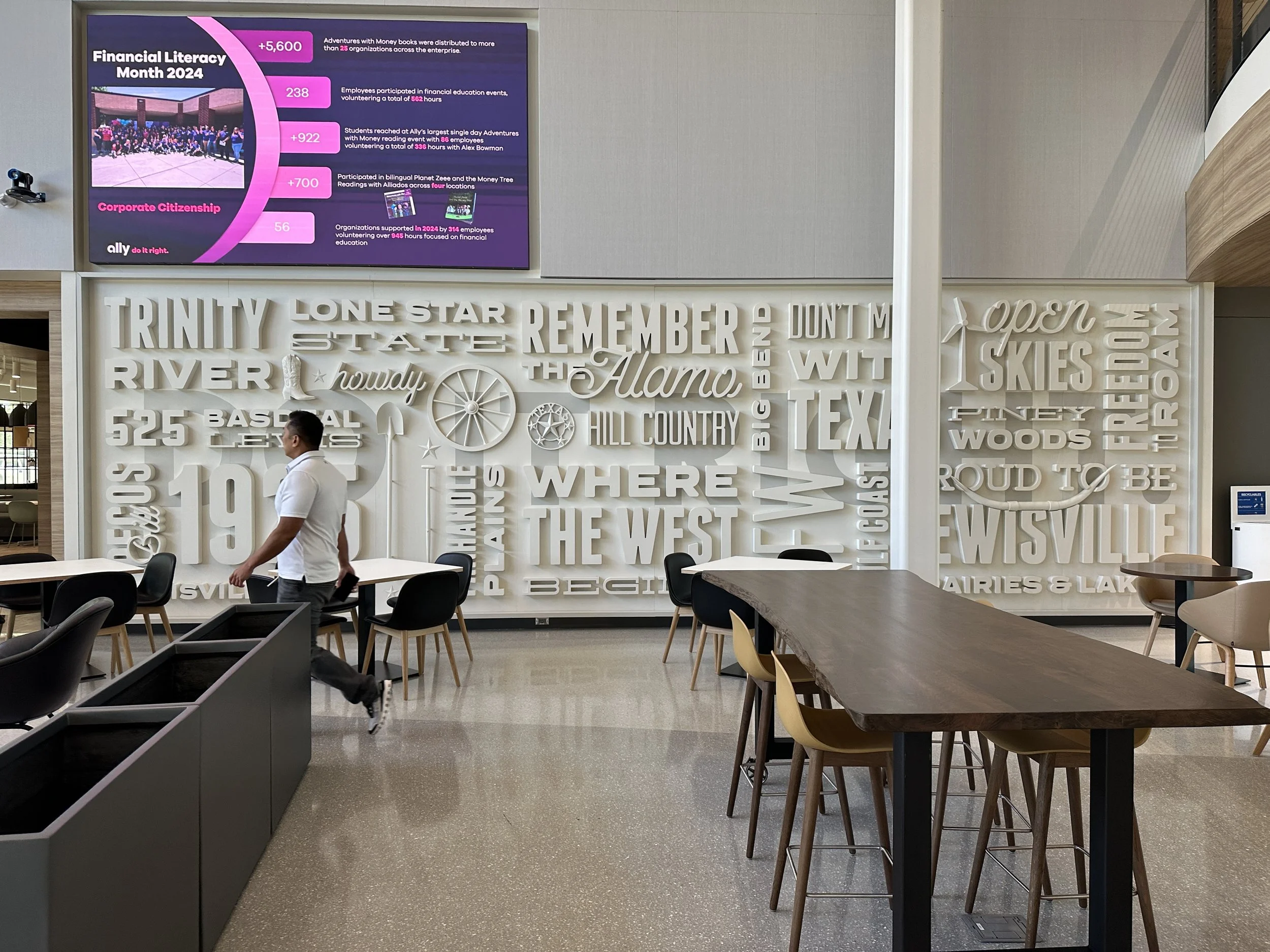
Environmental Branding and Graphics at Ally Financial in Lewisville, TX. Property of Studio Incognita.
Use wayfinding and environmental design to make the visit an experience within itself
“Wayfinding involves much more than simply planning and carrying out plans. It can evoke a range of emotions, spark interest in the surrounding environment, and lead one to consider the thoughts of fellow wayfinders.” (Spiers & Maguire, 2008)
Part of the role of wayfinding and environmental design is to not only show you where you’re going, but to show you where you are. And maybe even who you are. To deepen the visitor’s relationship to the space, you can utilize art, branded graphics, interpretive signage, or design installations to:
Educate on the history of the space, building, or community
Express values that define the identity of the community the space belongs to
Tell a story relevant to the purpose or goals of the space
Provide opportunities to integrate biophilic (natural) design elements that promote calm and healing within architectural spaces